Artwork
Kanzan (Hanshan) and Jittoku (Shide), approx. 1500-1625
Kanzan (Hanshan), by Tobai (Japanese), approx. 1500-1625. Japan. Hanging scroll; ink and light colors on paper. The Avery Brundage Collection, B60D39+.a.
Special public hours – 10 AM to 5 PM – on Thursday, May 7
Artwork
Kanzan (Hanshan), by Tobai (Japanese), approx. 1500-1625. Japan. Hanging scroll; ink and light colors on paper. The Avery Brundage Collection, B60D39+.a.
Video
In his most recent work, Indonesian artist Jompet Kuswidananto explores political and cultural identity, particularly around the people and history of Java. Informed by theories drawn from the field of cultural studies, he connects local history to global movements with a focus on the fragility of changing identities.
Background Information
Prior to the Edo period (1615–1868), many painters and sculptors remained anonymous, occupying relatively equal status to carpenters and other artisans. The position of the artist during the Edo period changed, as artists became more successful financially, and better educated. Some of them began to be seen as celebrities, arbiters of taste with eccentric personalities. Although many still worked for low wages in obscurity, the Edo period marks the emergence of the artist as individual, as the genius creator in Japan. Learn more.
Background Information
Xu Bing is renowned for his artistic explorations of the role of language in human life.
Artwork
Refined Character Type: Arjuna, third of the Pandava (Pandawa) brothers, approx. 1950. Indonesia; West Java. Wood, cloth, and mixed media. From The Mimi and John Herbert Collection, F2000.86.115.
Background Information
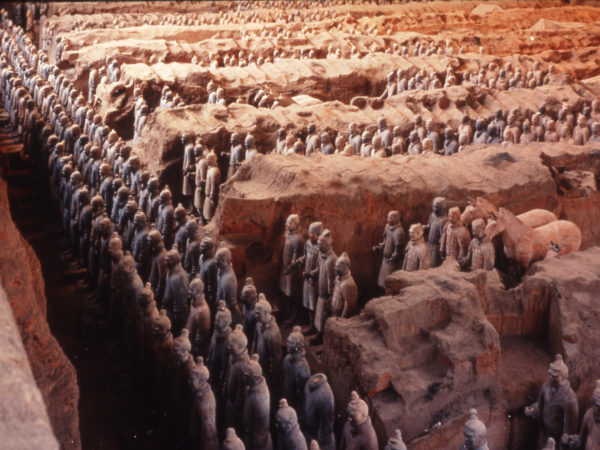
Archaeology is the study of the material remains of humanity’s past. Excavated materials, along with other historical objects and text records, form the primary source material on Ancient China.
Video
Explore the ancient kingdom of Angkor, which was one of the most powerful states in Southeast Asia from the 800s to the 1300s. A succession of kings built huge temples that remain in Cambodia today as some of the world’s greatest religious monuments.
Background Information
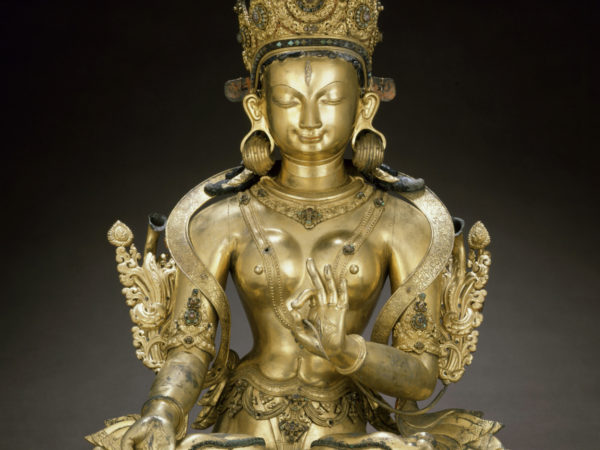
Buddhism was introduced into Tibet from India and China beginning in the 600s. Over the succeeding centuries, Buddhism became the dominant cultural form in Tibet, exerting a powerful influence not only over religion, but also over politics, the arts, and other aspects of society. Tibetan Buddhism eventually spread into Mongolia and Nepal, as well as into China, where it received imperial patronage especially during the Yuan (1260–1368) and Qing (1368–1644) dynasties.
Artwork
A True Picture of the Steamship Powhatan; A Ship Generally Called a Steam Frigate…, from the Black Ship Scroll, Edo period (1615-1868); approx. 1854. Japan. Handscroll segment mounted as a hanging scroll; ink and colors on paper. Museum purchase with assistance from the Japan Society of Northern California, 2012.60.2.
Artwork
A guardian king, Heian period (794–1185), approx. 900–1000. Japan. Wood. The Avery Brundage Collection, B67S1.