Activity
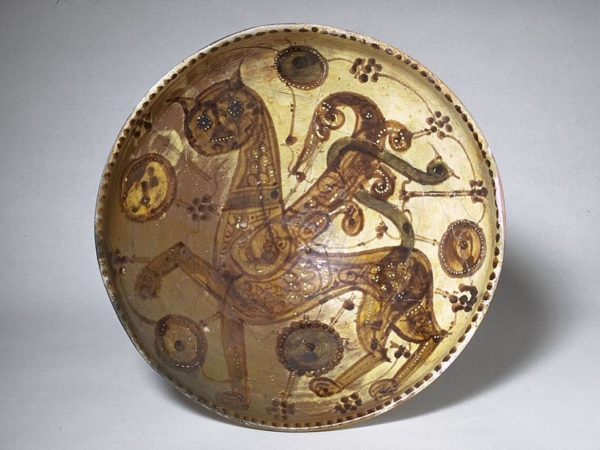
Mix and Match Mythical Creature Game
Use animal templates to make a mix and match game where you create new mythical creatures.
GRADE LEVEL: Pre-Kindergarten, Early Elementary School (K-3), Elementary School (4-5), Middle School (6-8)
We’re open Pride weekend! See our visitor tips …
We’re open Pride weekend! See our visitor tips …
Activity
Use animal templates to make a mix and match game where you create new mythical creatures.
Activity
Background Information
The earliest surviving representations of the Buddha date from hundreds of years after his death, so they are not portraits in the usual sense. Buddha images vary greatly from place to place and period to period, but they almost always show these conventional features . . .
Background Information
Buddhism has deeply influenced the character and evolution of Asian civilization over the past 2,500 years. It is based on the teachings of a historical figure, Siddhartha Gautama, who lived around the fifth century BCE. As it moved across Asia, Buddhism absorbed indigenous beliefs and incorporated a wide range of imagery, both local and foreign, into its art and religious practices. Buddhism continues to evolve as a religion in many parts of the world.
Activity
Create your own hanging scroll and name seal.
Background Information
A date around 1050 BCE is generally accepted as the date of the defeat of the Shang dynasty (approx. 1500 to 1050 BCE) by Wen Wang and the establishment of the Zhou. The Zhou is divided into Western and Eastern stages, with 771 BCE a critical year, when the Zhou court moved east to Luoyang.
Background Information
Background Information
Much of China, a country slightly larger than the continental United States, is hilly or mountainous. To its east lies the Pacific Ocean; to its south thick jungles. Learn more.
Video
An introduction to Zen, a form of Buddhism that emphasizes seeking one’s own Buddha nature through meditation.
Activity
Students will: 1.) Observe and discuss how artist Santiago Bose uses cultural symbols and artistic methods as post-colonial critique. 2.) Create an assemblage using found objects that conveys their personal identities. 3.) Interview a family member to uncover a photograph or symbol that recalls their heritage and include this in their assemblages. 4.) Write a first person narrative telling a story about their assemblages.