Background Information
Artist in Focus: Xu Bing
Xu Bing is renowned for his artistic explorations of the role of language in human life.
GRADE LEVEL: Middle School (6-8), High School (9-12), College and Beyond
We’re open Pride weekend! See our visitor tips …
We’re open Pride weekend! See our visitor tips …
Background Information
Xu Bing is renowned for his artistic explorations of the role of language in human life.
Artwork
Refined Character Type: Arjuna, third of the Pandava (Pandawa) brothers, approx. 1950. Indonesia; West Java. Wood, cloth, and mixed media. From The Mimi and John Herbert Collection, F2000.86.115.
Background Information
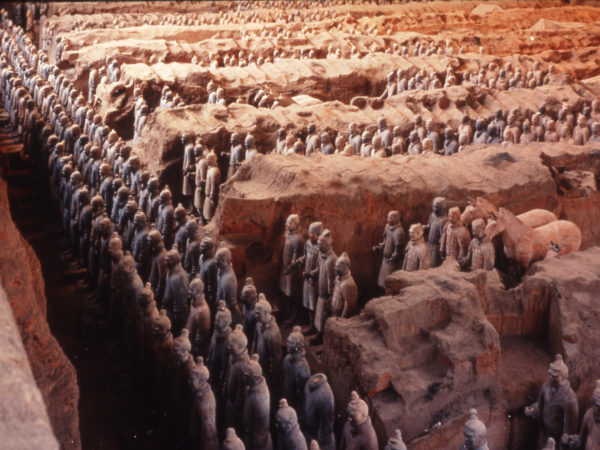
Archaeology is the study of the material remains of humanity’s past. Excavated materials, along with other historical objects and text records, form the primary source material on Ancient China.
Video
Explore the ancient kingdom of Angkor, which was one of the most powerful states in Southeast Asia from the 800s to the 1300s. A succession of kings built huge temples that remain in Cambodia today as some of the world’s greatest religious monuments.
Background Information
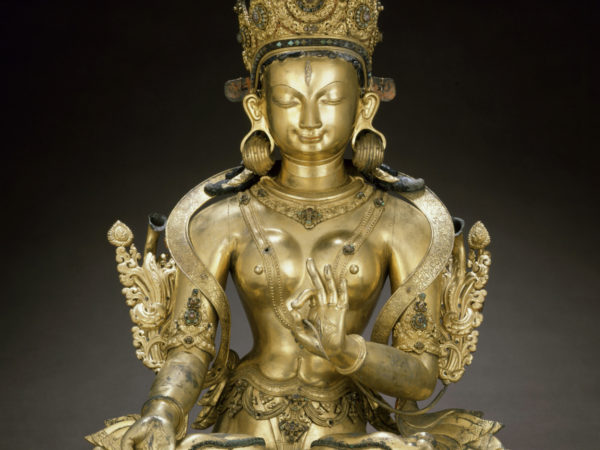
Buddhism was introduced into Tibet from India and China beginning in the 600s. Over the succeeding centuries, Buddhism became the dominant cultural form in Tibet, exerting a powerful influence not only over religion, but also over politics, the arts, and other aspects of society. Tibetan Buddhism eventually spread into Mongolia and Nepal, as well as into China, where it received imperial patronage especially during the Yuan (1260–1368) and Qing (1368–1644) dynasties.
Artwork
A True Picture of the Steamship Powhatan; A Ship Generally Called a Steam Frigate…, from the Black Ship Scroll, Edo period (1615-1868); approx. 1854. Japan. Handscroll segment mounted as a hanging scroll; ink and colors on paper. Museum purchase with assistance from the Japan Society of Northern California, 2012.60.2.
Artwork
A guardian king, Heian period (794–1185), approx. 900–1000. Japan. Wood. The Avery Brundage Collection, B67S1.
Artwork
Zhoong Kui (the demon queller) on a donkey, 1941, Pu Ru (1896-1963). China. Hanging scroll; ink and colors on paper. Acquisition made possible by John W. and Christine C. Barr, B82D2.
Background Information
A host may spend weeks planning for a tea gathering, including making decisions about which group of utensils to use. The assemblage of objects will reflect the season, complement and contrast with each other, and, ideally, create a theme or context that the host and guest will explore together during the course of the tea gathering. Learn more.
Background Information
Scholars often refer to the Tang (618–906) and Song (960–1279) dynasties as the “medieval” period of China. The civilizations of the Tang (618–906) and Song (960–1279) dynasties of China were among the most advanced civilizations in the world at the time. Discoveries in the realms of science, art, philosophy, and technology—combined with a curiosity about the world around them—provided the men and women of this period with a worldview and level of sophistication that in many ways were unrivaled until much later times, even in China itself.